
Starting today, I will be posting a series of video blogs on one of the most important pieces of evidence in a Nashville , Tennessee DUI case. The Metro Nashville Davidson County Police Department uses a report called a 132 report in all DUI investigations. Other than a blood or breath test, the 132 report is the most critical document to review in a Nashville DUI case. I have broken down the report into sections for the discussion.
How A Scram Device Works
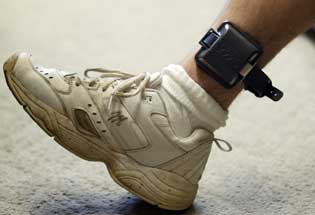 The Scram device has been in the news since Lindsay Lohan was ordered by a judge to wear one. I thought a little information on how the machine works might be helpful. Here is a brief summary of how the machine works from the website of the Scramx :
- Transdermal technology – SCRAMx checks for alcohol consumption by detecting and measuring any ethanol that is present in your skin’s insensible perspiration. This process measures the alcohol that comes off the skin around your ankle and, unlike blood tests or other methods, is completely non-invasive to you.
- Continuous monitoring – SCRAMx automatically tests for alcohol consumption around the clock. You will notice a slight vibration while the bracelet takes a reading, but otherwise the monitoring process is transparent and minimally disruptive to your daily activities.
I predict the use of the scram device will dramatically increase especially with the new DUI bail bond law coming into effect on January 1, 2010.
Lindsay Lohan and Scram
 I thought I would show everyone one what a SCRAM device looks like on Lindsay Lohan. Ms. Lohan was ordered to wear a Scram device when she failed to show up to court in California. I expect the SCRAM device to be used more often in Tennessee DUI cases by the courts. It works much like a breath test. The device senses alcohol from perspiration of the skin. Once it detects alcohol, it sends a result to the monitoring agency. The accused could be forced to wear it as a condition of probation or bond release.
Nashville DUI Arrest Quotas Revealed
Phil Williams of Nashville’s News Channel Five television station exposed the DUI arrest quotas of the Nashville DUI Enforcement Unit. The Metro Nashville DUI Enforcement Unit is responsible for the DUI unit, as well as the police officers that are assigned to the Governor’s Highway Traffic Safety Grant. The grant pays police overtime to work these special DUI shifts. Mr. Williams reported regarding the 2 arrest quota per shift.
Here’s an excerpt from the memo:
But News Channel 5 Investigates obtained several recent memos in which a DUI lieutenant warned officers that they could face disciplinary action if they did not start arresting more people.
"Self-motivated officers … should more often than not be able to arrest 2 DUI offenders each 8.5 hour shift," one memo read.
That’s "not a quota," the memo claimed, "but simply a benchmark."
But then it added, "If improvement does not take place, additional corrective action will occur."
On the witness stand, police officers don’t admit of a quota for arrests, but this memo indicates a different story. If no arrests are made, a police officer may not be invited back for this lucrative job.
So, the question is: is there any bias of Nashville Police Officers in making an arrest on subjective information like the field sobriety tests? Read the memos and you be the judge.

DUI Prosecutions in the Future
California DUI attorney Lawrence Taylor just posted an article on the future of DUI prosecutions. The blog post was premised on a speech that he presented several years ago. In Tennessee DUI cases, the severity of the prosecution is completely different in a drunk driving case verses another type of criminal case. One does not need to go any further than to read the new bail bond law on those accused of drunk driving to see the difference in how the law is applied to DUI charges.
DUI Prevention Tip of the Day
 My DUI prevention tip of the day was inspired by a new case I am handling. The tip of the day is to avoid using your cell phone while driving after having a beer. The National Highway and Traffic Safety Administration has produced numerous studies on cell phone usage and it’s impact on driving. Combine a little alcohol and talking on the cell phone and it equals some back driving. Bad driving results in a traffic stop which might lead you to a jail cell. Here is a short list of Rob McKinney’s tips on cell phone usage after a drink;
- Turn your cell phone off while driving.
- Don’t answer if it is on.
- Lock it in your trunk so you won’t be tempted. (This is my favorite).
- Never text while driving. It’s against Tennessee law anyway and could lead to a traffic stop on this use alone.
As always, please drink responsibly.
New Law on DUI Bail Bonds Passes in Tennessee
There is an attack on our constitutional rights as it relates to DUI cases continue in Tennessee. A new law goes in effect on January 1, 2011 which creates a host of issues. Here’s the new law ;
BE IT ENACTED BY THE GENERAL ASSEMBLY OF THE STATE OF TENNESSEE:
SECTION 1. Tennessee Code Annotated, Section 40-11-118(a), is amended by adding the following at the end of the existing language: If the defendant has one or more prior convictions for
§ 55-10-401, § 39-13-106 or § 39-13-213(a)(2),
the defendant shall not be released unless the court first determines he or she is not a danger to the community.
The court may consider the use of monitoring devices to eliminate danger to the community including, but not limited to:
(1) Ignition Interlock devices;
(2) Transdermal monitoring devices or other alternative alcohol monitoring devices;
(3) Electronic monitoring with random alcohol or drug testing; or
(4) Pretrial residency in an in-patient alcohol or drug rehabilitation center.
SECTION 2. Tennessee Code Annotated, Section 40-11-148, is amended by designating the existing language as subsection
(a) and by adding the following as a new subsection:
(b) If a defendant has been admitted to and released on bail for a violation of
§ 55-10-401, § 39- 13-106 or § 39-13-213(a)(2) and commits any of those crimes after release,
he or she shall be considered a danger to the community. He or she shall not be released with another bail unless the court first determines he or she is no longer a danger to the community. The court may consider the use of monitoring devices to eliminate the danger posed including, but not limited to:
(1) Ignition Interlock devices;
(2) Transdermal monitoring devices or other alternative alcohol monitoring devices;
(3) Electronic monitoring with random alcohol or drug testing; or
(4) Pretrial residency in an in-patient alcohol or drug rehabilitation center.
SECTION 3. This act shall take effect January 1, 2011, the public welfare requiring it.
The problem is that the Article I of the Tennessee Constitution prohibits excessive bail.
Who makes the determination of the priors? It has been my experience that the priors are often wrong.
Who makes the decision that the accused is not a danger to society? Some magistrate from Sumner County, Robertson County, or Rutherford County? What are their qualifications for making this decision? Can you get a lawyer or do you sit in jail?
The new law makes no sense unless you own stock in an ignition interlock company or a scram.
I wonder whose lobbyists were at work on this deal?
Can You be Convicted of DUI When The Car Is Parked?
The answer to that DUI question is yes in Tennessee. In Minnesota, Daryl Fleck was convicted of DUI when the car wouldn’t even start. Mr Fleck took his case all the way to the Minnesota Supreme Court which upheld his DUI conviction.
The theory of law where you can be convicted of DUI when parked is called "physical control". Here is what the court and juries look for;
- Where were the keys ?
- Where was the driver located?
- Was the car operable?
- What was the location of the car?

Former Ridgeland, MS Police Officer Joins Gallatin, TN Police Department
Daniel Soto, a Ridgeland, MS police officer, left his job under a cloud of perjury allegations. It appears Mr. Soto was a aggressive police officer who made a lot of DUI arrests. After the complaints surfaced, news reports indicated he did not show up in court and left for Tennessee. The DUI cases in Mississippi which were the subject of the investigation were dismissed. Why is this report important?
Mr. Soto is now employed by the Gallatin, Tennessee Police Department. I wonder what he’s doing now?
Defenses to a Breath Alcohol Test in Tennessee
 Until 1992, The State of Tennessee had to present expert testimony as the the results of a breath alcohol test in a Tennessee DUI case. In State of Tennessee v. Sensing 843 S.W. 2d. 412 ( Tenn.1992), The Tennessee Supreme Court relaxed the admissibility requirements of a breath test machine. Instead of requiring expert testimony, the court established strict rules for the breath alcohol test. One of those rules is the observation period prior to giving the test.
In Tennessee, as with most states, when a breath test is requested a defendant must remain under observation of a law enforcement officer for a twenty minute period. The purpose is to ensure that the subject has not burped, belched, hiccuped, or placed anything into the mouth. The rule is designed to ensure a false breath test is not created though mouth alcohol.
Thus the starting point in defending a drunk driving case with a breath test is to question the 20 minute observation period. The courts have held that doing paper work during the observation period invalidates the breath test.
- Was the police officer watching you the whole time?
- Was the police officer doing paperwork while he was watching you?
- Was the Police officer talking on his cell phone or radio?
Right now, I have a case where the police officer was talking to my client’s wife on the cell phone during the observation period. Remember the tests must be done according to protocol to be admissible.