Here’s an update on the 1300 DUI videos that were destroyed.  At first Metro Nashville Police blamed ICOP Digital stating the software had a flawed update.  Brian Haas of The Tennessean reported today on the company’s response.  Here is a copy of the letter that was sent to Metro Police Chief Steve Anderson.  You can read the whole letter but here is the gist of ICOP ‘s position.


The loss of any files was not the result of ICOP’s action, but the result of your personnel and/or operating procedures.

ICOP blames Metro Nashville Police in it’s open letter to Chief Anderson. While Metro Nashville Police blame ICOP. Here’s Nashville police department’s news release on the subject. It looks like a lawsuit waiting to happen.

What does this mean if you have a drunk driving case (DUI) pending in Nashville,Tennessee?  First, the police have a duty to preserve exculpatory evidence in all criminal cases. The question then becomes whether the destruction was negligent or intentional.  In Arizona v Youngblood, The United States Supreme Court held that the government’s failure to preserve evidence only violates due process if the the defendant can show the government acted in bad faith.  Tennessee has embraced this principle in State v. Ferguson which held in part….

 If the proof demonstrates the existence of a duty to preserve and further shows that the State has failed in that duty, the analysis moves to a consideration of several factors which should guide the decision regarding the consequences of the breach.   Those factors include:

1.  The degree of negligence involved;

2. The significance of the destroyed evidence, considered in light of the probative value and reliability of secondary or substitute evidence that remains available;  and

3.  The sufficiency of the other evidence used at trial to support the conviction

So, while the loss of the DUI videos does not automatically mean a dismissal, it does give you some great leverage in handling your case.
I have a trial set for Monday. While  I was working on the case today, I got the call with a plea bargain offer. The call made me hit the books just to verify my client is good to go for probation. Last year , The Tennessee Supreme Court found a lawyer was ineffective for telling his client  that he was eligible for probation when he was not. So , I reread Tennessee Code Annotated 40-35-303 to just make sure and I was right. However , I thought the information in the statute was worth repeating.

Tennessee Code Annotated 40-35-303 provides in part….. A defendant shall be eligible for probation under this chapter if the sentence imposed is Ten years or less. However , no defendant shall be eligible for probation if convicted of the following offenses:

                                List of Crimes Not Eligible For Probation Under Tennessee Law

  1. Aggravated Kidnapping
  2. Aggravated Robbery
  3. Aggravated Sexual Battery
  4. Statutory Rape By An Authority Figure
  5. Aggravated Child Abuse and Neglect
  6. Possession of Schedule I Drugs
  7. Sexual Exploitation of a Minor
  8. Aggravated Sexual Exploitation of a Minor
  9. Especially Aggravated Exploitation of a Minor.

Here’s the list. Before , you accept a plea bargain . Know the consequences of the plea.


Identifying who committed the crime is one element of proof in most criminal cases. There are several different methods of identification. First , the person knows the accused. Second , the police may use a lineup or show up to identify a defendant, Third , the defendant may be identified in open court by the alleged victim. Recent statistics from the Innocence Project illustrate this problem.

Eyewitness Misidentification

Eyewitness misidentification is the single greatest cause of wrongful convictions nationwide, playing a role in more than 75% of convictions overturned through DNA testing.

While eyewitness testimony can be persuasive evidence before a judge or jury, 30 years of strong social science research has proven that eyewitness identification is often unreliable. Research shows that the human mind is not like a tape recorder; we neither record events exactly as we see them, nor recall them like a tape that has been rewound. Instead, witness memory is like any other evidence at a crime scene; it must be preserved carefully and retrieved methodically, or it can be contaminated.


How do Tennessee court’s instruct on identification problems at trial ? The following is from the Tennessee Pattern Jury Instructions on identification;

One of the issues in this case is the identification of the defendant as the person who committed the crime. The state has the burden of proving identity beyond a reasonable doubt. Identification testimony is an expression of belief or impression by the witness, and its value may depend upon your consideration of several factors. Some of the factors which you may consider are:
(1) The witness’ capacity and opportunity to observe the offender. This includes, among other things, the length of time available for observation, the distance from which the witness observed, the lighting, and whether the person who committed the crime was a prior acquaintance of the witness;
(2) The degree of certainty expressed by the witness regarding the identification and the circumstances under which it was made, including whether it is the product of the witness’ own recollection;
(3) The occasions, if any, on which the witness failed to make an identification of the defendant, or made an identification that was inconsistent with the identification at trial; and
(4) The occasions, if any, on which the witness made an identification that was consistent with the identification at trial, and the circumstances surrounding such identifications.
So , apply the facts to the jury instructions.


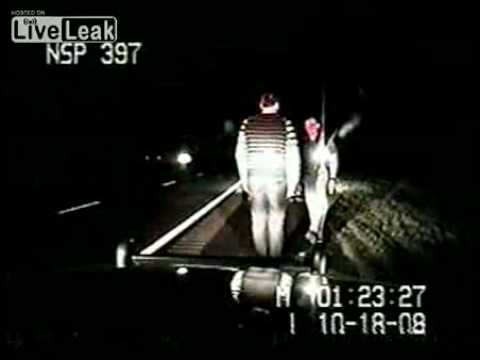
   A faulty software update erased 1300 Nashville DUI arrests.  Metro Nashville Police report that the videos that were erased  were from October 2009 until April 2010. All of Nashville’s DUI unit  police officers have a video in their patrol car. The purpose of the video is to record the field sobriety tests and the observation period before a breath alcohol test is given. What does this mean for those with a destroyed DUI video ?

Loss or destruction of evidence is a big issue in any criminal case. The police have a duty to preserve the evidence they collect. In this case , the videos have been lost forever. It gives the defendant some bargaining power in getting their cases either reduced to a reckless driving or a special jury charge if the case goes to trial. Bottom line is that the loss of the video tapes gives them a solid legal defense.Here’s what a Nashville General Sessions Judge had to say about the issue.


"It’s a fairly significant piece of evidence obviously," said presiding General Sessions Judge Dan Eisenstein. 

The judge said video evidence can play a key role in all types of criminal cases.

"It’s highly unusual. It doesn’t happen everyday," said Eisenstein.

It is my understanding the loss of the DUI videos was discovered in court on 8-3-2010 . Judge Eisenstein made inquiries after a defense lawyer asked about getting the DUI arrest videos.

Here’s the questions that need to be answered in light of the disclosure of the destruction of the DUI videos;

  1. When did the Metro Nashville Police Department learn of the destruction of the DUI video tapes ?
  2. When did the District Attorney’s office learn of the problem ?

Surely , the police knew or should have known about the loss of the videos before this week. Remember , some videos were lost as long ago as October.Stay tuned for how this story plays out.


A disbarred Gallatin , Tennessee criminal defense lawyer who was found guilty of smuggling drugs into the Sumner County jail has lost her appeal for judicial diversion in the Tennessee Court of Criminal Appeals. Jocelyn Mimms was convicted of conspiracy and attempt to introduce contraband into a penal facility. Ms.Mimms was sentenced to serve two years in jail. She appealed her denial of judicial diversion by the trial court .

Tennessee code Annotated 40-35-313 provides that a qualified defendant may be placed on judicial diversion. After the period of probation , The defendant can petition the court to have his or hr criminal record expunged. Judicial diversion is one of the great tools a Tennessee criminal defense attorney has at their disposal to avoid a permanent conviction on a client’s criminal record. The trial court based it’s decision on the facts  that Ms. Mimms had not accepted responsibility for her actions and that she abused her position of trust.  The Tennessee Court of Criminal Appeals affirmed the trial court and denied her application for judicial diverison.

There are three key points in the case  for criminal defense attorneys.

  1. Do not talk on the phone from jail or prison. Ms Mimms , A Vanderbilt Law School graduate , spoke on the jailhouse phone detailing the drug deals. Stupid. There is an an announcement that all calls are recorded. Jailhouse calls are routinely used in criminal trials that they were used here.
  2. A criminal defense lawyer should not date their client who is in Jail. The ethical rules forbid it and you could wind up in jail.
  3. Judicial diversion is a great tool to avoid a criminal conviction in Tennessee. It is one tool that a Tennessee criminal defense attorney should keep in his get out of jail file.


Just who is a domestic violence victim?  Well, the Tennessee State Legislature defines who is a domestic violence victim by statute.  I am glad it is defined because it eliminates any debate. Here’s the definition straight from the Tennessee Code.

function RedirectUrl(strRealPath, strLookFor, strResolve)
{
//alert(“Calling RedirectUrl”);
strCurrentLocation=” + window.location;
nQueryIndex=strCurrentLocation.indexOf(“?”);
if(nQueryIndex!=-1)
{
strQuery=strCurrentLocation.substr(nQueryIndex, strCurrentLocation.length);
}
else
{
strQuery=””;
}
//alert(strQuery + ‘Location is ‘ + strCurrentLocation + “Real path is ” + strRealPath + ” and lookfor is ” + strLookFor + ” ” + strCurrentLocation.length + ” and strResolve is ” + strResolve);
strNewLocation=”;
iReplaceAt=strCurrentLocation.indexOf(strLookFor);
//alert(“IReplaceAt is ” + iReplaceAt);
iReplaceAt=iReplaceAt-1;
strNewLocation=strCurrentLocation.substr(0, iReplaceAt);
//alert(“strNewLocation is ” + strNewLocation);
strNewLocation=strNewLocation+strRealPath;
strNewLocation=strNewLocation+strResolve;
strNewLocation=strNewLocation+strQuery;
//alert(‘New location is ‘ + strNewLocation);
self.location=strNewLocation;
}


39-13-111. Domestic assault. —


(a)  As used in this section, “domestic abuse victim” means any person who falls within the following categories:


     (1)  Adults or minors who are current or former spouses;


     (2)  Adults or minors who live together or who have lived together;


     (3)  Adults or minors who are dating or who have dated or who have or had a sexual relationship, but does not include fraternization between two (2) individuals in a business or social context;


     (4)  Adults or minors related by blood or adoption;


     (5)  Adults or minors who are related or were formerly related by marriage; or


     (6)  Adult or minor children of a person in a relationship that is described in subdivisions (a)(1)-(5).


(b)  A person commits domestic assault who commits an assault as defined in § 39-13-101 against a domestic abuse victim.


(c)  (1)  Domestic assault is punishable the same as assault in § 39-13-101.


     (2)  In addition to any other punishment that may be imposed for a violation of this section, if, as determined by the court, the defendant possesses the ability to pay a fine in an amount not in excess of two hundred dollars ($200), then the court shall impose a fine at the level of the defendant’s ability to pay, but not in excess of two hundred dollars ($200). The additional fine shall be paid to the clerk of the court imposing sentence, who shall transfer it to the state treasurer, who shall credit the fine to the general fund. All fines so credited to the general fund shall be subject to appropriation by the general assembly for the exclusive purpose of funding family violence shelters and shelter services. This appropriation shall be in addition to any amount appropriated pursuant to § 67-4-411.


     (3)  A person convicted of a violation of this section shall be required to terminate, upon conviction, possession of all firearms that the person possesses as required by § 36-3-625.


[Acts 2000, ch. 824, § 1; 2002, ch. 649, § 3; 2008, ch. 744, § 1; 2009, ch. 455, § 4.]

https://youtube.com/watch?v=8S7vJKfFzPU%26hl%3Den_US%26fs%3D1

Several years ago the Tennessee State Legislature enacted the Drug Free School Zone Act.  The purpose was to prevent drug trafficking at or near our schools.  I agree wholeheartedly that schools should be a place of learning and not a breeding ground for drug sales to children.  However, the police and the District Attorneys Office uses the school zone act as a hammer in the war on drugs.  Now, driving though a school zone triggers the enhanced punishment portion of the drug free school zone act.  A school zone drug charge increases the punishment and makes the service of the sentence at 100 % to serve. Watch the video to see how just driving down Charlotte Avenue in Nashville, Tennessee can impact a case.

Brian Haas of The Tennessean wrote a story about the proposed  $15 million dollar crime lab project may have to be scaled back. The real question he should answer is why does The Nashville Metropolitan Police Department need a crime lab.  First, the cost is $15 million when the Tennessee Bureau Of Investigation has a forensic lab right here in Davidson County.  Second, I would suggest reading the National Academy Of Sciences Report  " Strengthening Forensic Sciences, A Path Forward". The report is a detailed study into many complex problems with forensic science labs.

A major problem noted in the National Academy of Sciences report is that crime labs are often part of the law enforcement agencies, as opposed to independent agencies. The implication is that the possibility exists for bias, no matter how unintentional, toward the prosecution.  In Nashville, the crime lab was strongly supported by former Chief of Police Serpas who is now being audited for alleged false crime statistics.  Nashville has already had some problems when they created a ballistics department.  For good science Nashville needs an independent forensic crime lab, not merely a rubber stamp. Plus, the city saves $15 million.

Who shall guard the guardians comes to mind.


Today starts a new topic for the Nashville Criminal Law Report .Brentwood , Tennessee lawyer John Day wrote a series of posts on " What it takes to be a great trial lawyer". I read Mr. Day’s series of posts with a passion.  As I sat in court listening to a sentencing in criminal court here in Nashville , It reminded me of his thoughts. and observations. So here’s my thoughts on " What it takes to be a great criminal defense lawyer.

                                              Know The Tennessee Rules of Evidence

As I mentioned earlier , I was watching a sentencing hearing while waiting for my case to be called. The defendant had plead guilty to  aggravated assault and was testifying as to his story of what happened . The Assistant District Attorney was cross examining him trying to impeach his testimony based upon a prior statement.to the police. One warning never talk to the police unless you have a lawyer with you. The method of cross by the state was against the rules. The defense attorney made a timely objection. However,  the court did not make any rulings because the objection was not precise as to reason the cross examination was improper.

The Assistant District Attorney was cross examining the defendant from a police report on what was alleged to have been his statement. No transcript or written statement was used.

One quality of a great criminal defense lawyer is you must know the Tennessee Rules of Evidence backwards and forwards. The second teaching point is always have your client read any report that may have his statement in it before he testifies at any hearing or trial.